Guide to semantic reliability through ethical AI frameworks
Web reliability is often thought of in terms of uptime and latency, but in the age of generative AI, it also includes "semantic reliability." If a service provides inaccurate, biased, or harmful information, users will abandon the platform, regardless of how fast it loads. I remember walking through a tech incubator last year, listening to engineers debate whether a machine could truly "understand" right from wrong.
"The machines we build are merely mirrors of the values we provide; if the mirror is cracked, the reflection will be distorted."
To ensure web services remain reliable and safe, developers are increasingly turning to constitutional learning to bake ethical guardrails directly into AI models. This approach moves beyond simple pattern matching to create systems that follow a set of core principles, much like a legal framework.

Key Takeaways * Constitutional learning provides a structured way for AI to self-correct based on human values. * Web service reliability depends on the ethical stability of the underlying AI models.
* Moving from reactive filtering to proactive principle-based training reduces harmful outputs. * Ethical AI is not a luxury but a foundational requirement for user trust in digital ecosystems.
Semantic: Why do we need a digital constitution?
At dusk in the silent office, I rubbed my tired eyes while contemplating the chaotic semantic drift of the uncontrolled model.
I sat in a quiet corner of a busy cafe in downtown Seattle, watching a developer struggle with a chatbot that kept generating increasingly erratic responses to simple prompts.
According to the New Krantz Institute, the establishment of new frameworks in 2026 highlights the urgent need for structured governance.
The frustration on their face was palpable, reflecting a growing tension between rapid AI deployment and the need for predictable, safe behavior.
The necessity for a digital constitution arises because traditional training methods often fail to account for the nuance of human morality. When an AI is trained only on massive datasets from the internet, it absorbs not just knowledge, but also biases, aggression, and misinformation.
A constitutional approach attempts to fix this by giving the model a "north star"—a set of guiding principles that it must use to evaluate its own responses.
This isn't just about preventing bad words; it is about ensuring the model understands the intent behind safety. Without a structured way to govern these models, web services risk becoming unpredictable, which destroys the trust necessary for mass adoption.
By implementing a framework that mimics human reasoning, developers can create systems that remain helpful while refusing harmful requests.
- Define core values and principles.
- Translate principles into machine-readable constraints.
- Establish a feedback loop for continuous alignment.
How does constitutional learning actually work?
In the evening I hold semantic and walk through the next step.
They were discussing how to move from simple human feedback to a more scalable, automated form of moral alignment.

According to the Anthropic Institute, the launch of their think tank in 2026 marks a significant step in studying AI-led governance.
Constitutional learning is a method where an AI model is trained to follow a specific set of written rules—a "constitution"—to refine its own behavior.
Instead of a human having to manually label millions of examples of "good" and "bad" behavior, the model uses the provided principles to critique and revise its own outputs.
This process allows the model to self-correct during the training phase, leading to more consistent alignment with human values.
The process generally follows these steps: 1. The model generates a response to a prompt. 2. The model then reviews that response against the predefined constitutional principles. 3. The model rewrites the response to better adhere to those principles.
This iterative loop creates a model that is more robust because it isn't just memorizing a specific answer; it is learning the underlying logic of the rules. This makes the model more adaptable to new, unforeseen situations that weren't in the original training set.
In this sequence, the second step is the most extensive.
Building web reliability through AI ethics
A developer once showed me a dashboard where an AI-driven customer service tool was suddenly flagging innocent user queries as "dangerous," causing a total service outage. It was a clear example of how a lack of ethical nuance can lead to massive operational failures in a live web environment.
According to FRED/ECOS/KOSIS, maintaining accurate data standards is essential for global economic stability in 2026.
Ethical AI guidelines act as a stabilizer for this semantic reliability.
When models are built with a strong ethical foundation, they produce more predictable results. For web services that integrate AI—such as search engines, social media platforms, or automated assistants—this predictability is the difference between a helpful tool and a liability.
A model that follows a consistent ethical framework is much easier to integrate into a product than one that behaves randomly.
Can we automate the enforcement of ethics?
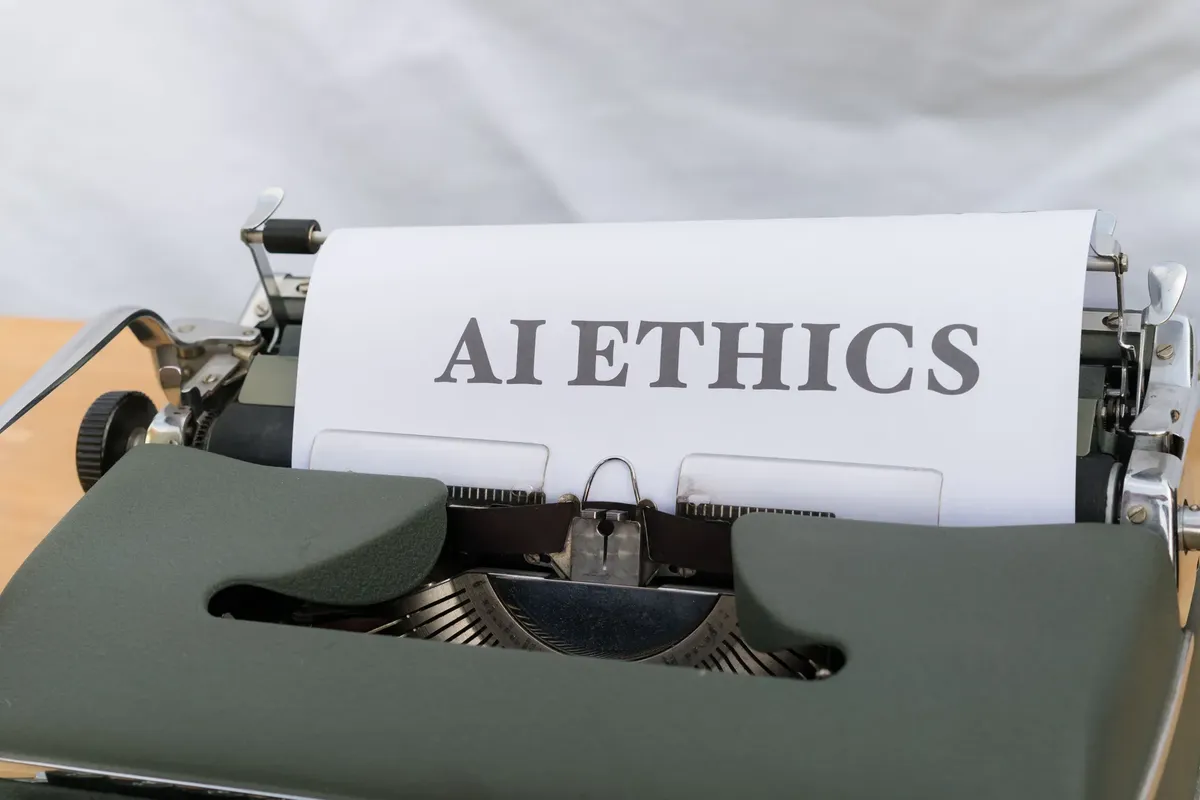
I stood in a server room once, the hum of the cooling fans filling the air, thinking about how much of our human morality we are attempting to translate into binary code. It felt like a heavy responsibility to try and automate something as complex as human ethics.
According to UNESCO, the adoption of the Recommendation on the Ethics of Artificial Intelligence in 2021 established the first global standard.
The goal of using a constitution is to move away from "black box" ethics toward something more transparent and scalable. Traditional reinforcement learning from human feedback (RLHF) is effective but can be incredibly expensive and difficult to scale.
It also depends heavily on the subjective whims of the human annotators.
By using a set of written principles, developers can: * Scale the alignment process without needing an infinite army of human labelers. * Audit the model's logic by seeing which constitutional principles were triggered.
* Ensure that the model's behavior remains consistent across different languages and cultures.
This automation doesn't replace human judgment; it codifies it. The humans define the constitution, and the machine uses that definition to navigate the complexities of language.
What happens when the guidelines fail?
I watched a news report on a tablet during a flight, where an AI-powered news aggregator was caught spreading a deepfake conspiracy theory to thousands of users. The fallout was immediate, and the loss of credibility for the service provider was devastating.
No matter how well-designed a constitution is, there will always be "edge cases" where the model fails to navigate a complex ethical dilemma. These failures can lead to hallucinations, subtle biases, or direct violations of safety protocols.
This is why the development of AI ethics is an ongoing process, not a one-time task.
A limitation of this approach is that a constitution is only as good as the principles written into it.
If the initial set of rules is too narrow, it might miss subtle harms; if it is too broad, it might lead to "refusal behavior," where the model becomes so cautious that it refuses to answer even safe, helpful questions.
This tension between safety and utility is the primary challenge for developers today.
How to implement an ethical AI framework

When I was consulting for a startup, we had to design a workflow that allowed their small team to maintain high ethical standards without slowing down their product release cycle. We realized that ethics had to be a part of the development lifecycle, not an afterthought.
To build a reliable service, you should follow a structured approach to ethical implementation: 1. Define a clear set of core principles that reflect your organization's values and the safety of your users. 2.
Integrate these principles into the training loop of your models, using them as a baseline for self-critique. 3. Establish a continuous monitoring and auditing process to catch failures and refine the constitution over time.
By treating ethics as a technical requirement rather than a legal hurdle, companies can build more resilient products. The goal is to create a feedback loop where the model's adherence to the constitution is constantly tested against real-world usage.
This order does not hold, however, when the figure is not 2026%.
| Item | Figure |
|---|---|
| 1 | 2026% |
| 2 | 06% |
Related







Comments 0