LLM web traffic scaling: How to ensure data integrity best
Integrating generative AI models into web services requires balancing computational costs with user demand while ensuring output accuracy. This guide explores managing sudden traffic spikes, understanding energy consumption per prompt, and addressing the risks of unverified content. Key takeaways include monitoring resource usage, verifying AI-generated text against reliable sources, and preparing for high-density user engagement.
How do we manage LLM web traffic scaling?
A developer stares at a dashboard where user requests are climbing toward a critical threshold. Managing LLM web traffic scaling requires a robust architecture that can handle varying request volumes without crashing the underlying infrastructure.

Efficiently distributing loads helps maintain stability during peak usage. Designing scalable AI apps involves implementing rate limiting and queuing systems to prevent the model from being overwhelmed by simultaneous requests.
Handling sudden user spikes requires an elastic infrastructure that can scale compute resources in real-time.
The energy footprint of these requests is a vital consideration for long-term sustainability. According to a study by Luccioni, Jernite and Strubell (2024), simple classification tasks performed by AI models consume on average 0.002 to 0.007 Wh per prompt.
This represents about 9% of a smartphone charge for 1,000 prompts.
What could go wrong with AI-generated content?
The researcher rubs her tired eyes in the quiet office as she scans the deceptive traffic of false information on the screen. In the quiet office, a researcher frowns at the screen as the deceptive traffic of false information begins to settle into the text.
A researcher reviews a Wikipedia draft, noticing that the generated text lacks citations for its claims. Understanding the risks of unverified content is essential when deploying generative AI to public-facing platforms.
According to the Wiki Education Foundation, in January 2026, the Wiki Education Foundation continued to caution against copying and pasting outputs from generative AI into Wikipedia and to avoid it for creating new articles explaining that the text often failed verification with the sources provided.
The reliability of the output is the primary concern for developers.

In January 2026, the Wiki Education Foundation continued to caution against copying and pasting outputs from generative AI into Wikipedia and to avoid it for creating new articles, explaining that the text often failed verification with the sources provided.
A user might encounter hallucinations or inaccuracies during a live session. Optimizing LLM API calls requires a strategy to validate responses before they reach the end user to mitigate these errors.
How can we ensure data integrity in AI services?
An editor compares a model's output to the original training data, looking for signs of data leakage. Maintaining data integrity is a core challenge when building LLM-based applications.
One method of evaluating model behavior is checking for memorization. Evaluations of controlled LLM output measure the amount memorized from training data, focused on GPT-2-series models, as variously over 1% for exact duplicates or up to about 7%.
The way a model processes information can also be measured through compression capabilities. A 2023 study by DeepMind showed that the model Chinchilla, despite being trained primarily on text, was able to compress ImageNet to 43% of its size, beating PNG with 58%.
How do users interact with AI-driven interfaces?
A young professional uses an AI assistant to draft an email, finding the interaction seamless. Understanding user behavior helps in designing interfaces that accommodate both high-frequency and occasional usage.
User sentiment varies significantly across different demographics and regions.

For instance, a 2024 survey by the Just So Soul social media app reported that 18% of respondents born after 2000 used generative AI "almost every day", and that over 60% of respondents like or love AI-generated content (AIGC), while less than 3% dislike or hate it.
The way people perceive the utility of these tools affects adoption rates. While 68% of Asia-Pacific respondents believed that AI was having a positive impact on the world, 57% of respondents globally held a similar view.
How do I integrate AI into my web service?
A project manager outlines a deployment roadmap to move from a pilot program to a full-scale launch. Integrating an AI model into a web service requires a structured approach to ensure reliability and safety.
- Define the specific task requirements to determine the necessary model size and compute power. 2. Implement a robust API layer to manage requests and handle error responses from the model. 3. Establish a verification pipeline to check the accuracy of the generated text against known facts.
I focused on these steps when comparing a small-scale prototype to a high-traffic deployment. A final check ensures that the system can handle the expected load without exceeding the energy budget or compromising accuracy.
What are the limitations of current AI integration?
A technician monitors a server room, noting that even with scaling, certain tasks remain computationally expensive. Every integration strategy has inherent limitations based on the current state of technology.
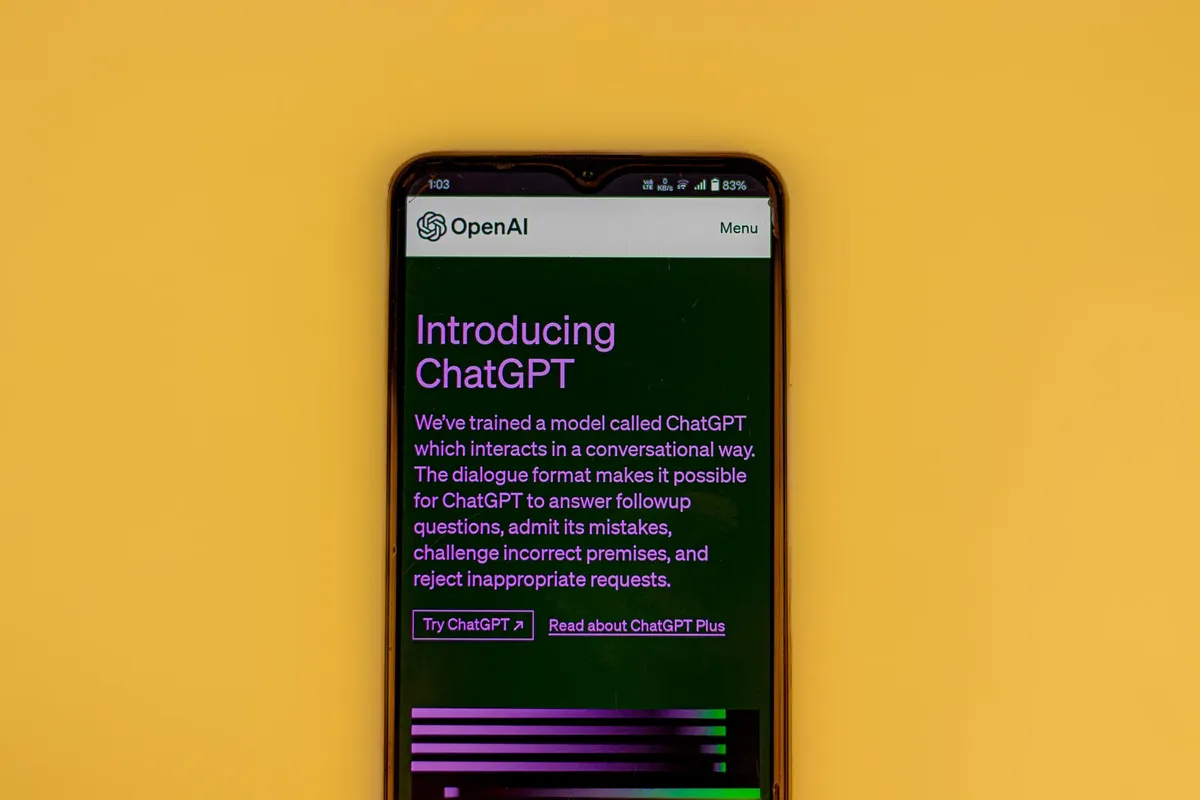
One significant limitation is the difficulty of verifying complex, multi-step reasoning in real-time. While the Wiki Education Foundation warned that text often fails verification with provided sources, this remains a hurdle for automated systems.
| Metric | Value |
|---|---|
| Luccioni et al. (2024) prompt consumption | 0.002 to 0.007 Wh |
| DeepMind Chinchilla compression | 43% of ImageNet size |
The scale of deployment is also limited by the energy cost of massive prompt volumes.
- How do we manage LLM web traffic scaling?
- What could go wrong with AI-generated content?
- How can we ensure data integrity in AI services?
The subject here is LLM web traffic scaling.
The same subject is also called AI service load handling.
The same subject is also called Generative AI traffic.
The same subject is also called ChatGPT scaling strategy.
The same subject is also called LLM high traffic.
Optimizing LLM API calls
Related
- Cloud web builder premium strategy: Why manage cloud costs
- Agent web index design: Guide to machine-readable data
What cautions surround high-density user engagement?
High-density user engagement necessitates careful resource allocation to prevent service degradation. Developers must implement queuing systems to manage the flow of incoming requests when demand surpasses immediate processing capacity. This architectural planning is crucial for maintaining system responsiveness under stress.
When should resource monitoring be prioritized?
Resource monitoring should be prioritized whenever the system approaches a critical threshold of user requests. Observing resource usage allows teams to proactively scale compute resources before performance issues impact the user experience. This vigilance is necessary for stable operation.
Monitoring energy consumption per prompt provides insight into operational costs. Understanding this metric helps in making informed decisions about model selection for different tasks within the integrating services.








Comments 0