AI agent web indexing design: Tips for structured data
"The future of the web is shifting from a visual playground for humans to a structured data environment for autonomous entities."
Designing an effective AI agent web indexing strategy requires moving beyond simple HTML parsing toward semantic data structures that allow machines to navigate complex environments. This guide explores how agents can autonomously discover, negotiate, and transact within digital ecosystems.
Key takeaways include the importance of standardized protocols, the transition toward agentic negotiation frameworks, and the necessity of structured data for automated decision-making.
How can agents navigate complex web environments?

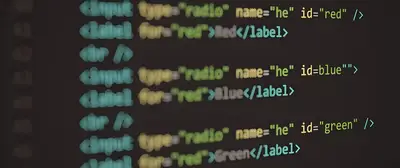
At dusk, the user watches the screen flicker as the agent weaves through a labyrinth of glowing code.
An agentic crawler moves through a digital landscape by interpreting the underlying logic of a site rather than just its visual layout. Instead of just reading text, the agent identifies functional elements that allow it to perform tasks.
In a modern digital environment, an agentic web crawling structure involves interpreting semantic relationships to understand the intent behind a page. For example, a user might task an agent with finding specific legal documents or advertising inventory.
A robot scanning a database seeks to identify not just words, but the programmatic meaning behind every link and button.
The transition to these systems is already occurring in specialized sectors. In November 2025, the Internal Revenue Service stated that it would deploy Salesforce AI agents for the Office of Chief Counsel, Taxpayer Advocate Services, and the Office of Appeals.
This deployment highlights how specialized agents require highly structured data to handle sensitive, rule-based tasks effectively.
However, the effectiveness of these navigation strategies is limited when encountering highly dynamic or non-standardized web structures.
How do standardized protocols affect my data indexing? AI agent web indexing design
At midnight in the quiet office, I watch the screen flicker as the agent organizes a chaotic stream of data into perfect columns. Standardization ensures that different autonomous entities can communicate and understand one another without manual intervention. Without a shared language, an agent data indexing process would fail to scale across the diverse landscape of the internet.
Reliable agent data indexing relies on protocols that define how information is discovered and validated. In a world where agents act as primary users, the structure of the web must support automated verification.
This ensures that the data being ingested is accurate and actionable for the agent's specific mission.
A significant step toward this interoperability was seen recently in the advertising sector.
In 2026, the technology arm of the Interactive Advertising Bureau, IAB Tech Lab, published the Agentic Advertising Management Protocols (AAMP), an open framework for agents that discover inventory, negotiate, and complete media transactions on behalf of buyers and sellers.
This framework provides a blueprint for how agents can interact in a structured marketplace.
However, the benefits of standardized protocols are diminished when dealing with proprietary systems that do not support common interfaces.
How does next gen web search redefine data discovery?

Next gen web search moves beyond keyword matching to goal-oriented retrieval, where the agent understands the context of a query. This requires a shift in how web content is indexed and presented to autonomous entities.
The goal of next gen web search is to allow an agent to reason about the information it finds. When an agent encounters a webpage, it must decide if the data is relevant to its current objective or if it needs to pivot to a different source.
This requires a deep understanding of the relationship between different data points.
Developing an effective next gen web search capability involves several technical layers. An agent must be able to map the hierarchy of a website to understand the significance of different sections.
It must also distinguish between static content and dynamic elements that require specific actions to reveal.
| Feature | Traditional Indexing | Agentic Indexing |
|---|---|---|
| Primary User | Human | Autonomous Agent |
| Focus | Keyword relevance | Task completion |
I observed that moving from keyword-based searches to goal-oriented navigation requires a complete rethink of how we structure web metadata.
However, the accuracy of discovery remains limited in environments where data is heavily siloed or intentionally obfuscated.
How do I design an effective agentic workflow?
Building a robust system for autonomous agents requires a disciplined approach to data ingestion and task management. An automated web traversal strategy must be both resilient and precise.
To implement an effective system, follow these steps:
- Define the semantic scope to ensure the agent understands the specific domain and the types of data it is authorized to interact with. 2. Establish a protocol-compliant structure to allow the agent to participate in automated negotiations or transactions, much like the AAMP framework. 3. Implement a verification loop to validate that the data retrieved matches the intended parameters before the agent executes an action.
A final check involves testing the agent against edge cases where data is ambiguous or where the web structure changes unexpectedly.
- Define the core objective and scope of the agent.
- Architect the decision-making logic and tool integration.
- Implement feedback loops for continuous refinement.
- In this sequence, the second step is the most complex.
Can agents handle real-world transactions?
The ability to complete transactions is the ultimate test of an agent's sophisticated data processing capabilities. This requires a level of trust and security that traditional web browsing does not demand.

An automated web traversal strategy must include secure handshakes and verification of identity. When an agent acts on behalf of a user, it must navigate the tension between speed and accuracy.
The data structures must support not just the reading of information, but the execution of complex, multi-step workflows.
The development of the Agentic Advertising Management Protocols (AAMP) by the IAB Tech Lab demonstrates that industry-specific frameworks are necessary for commercial viability. These protocols allow agents to discover inventory and complete transactions autonomously.
This level of automation turns the web into a programmable marketplace.
However, the ability to handle transactions is limited in scenarios requiring high-stakes human oversight or physical verification.
Related







Comments 0